
Subtotal ₹0.00

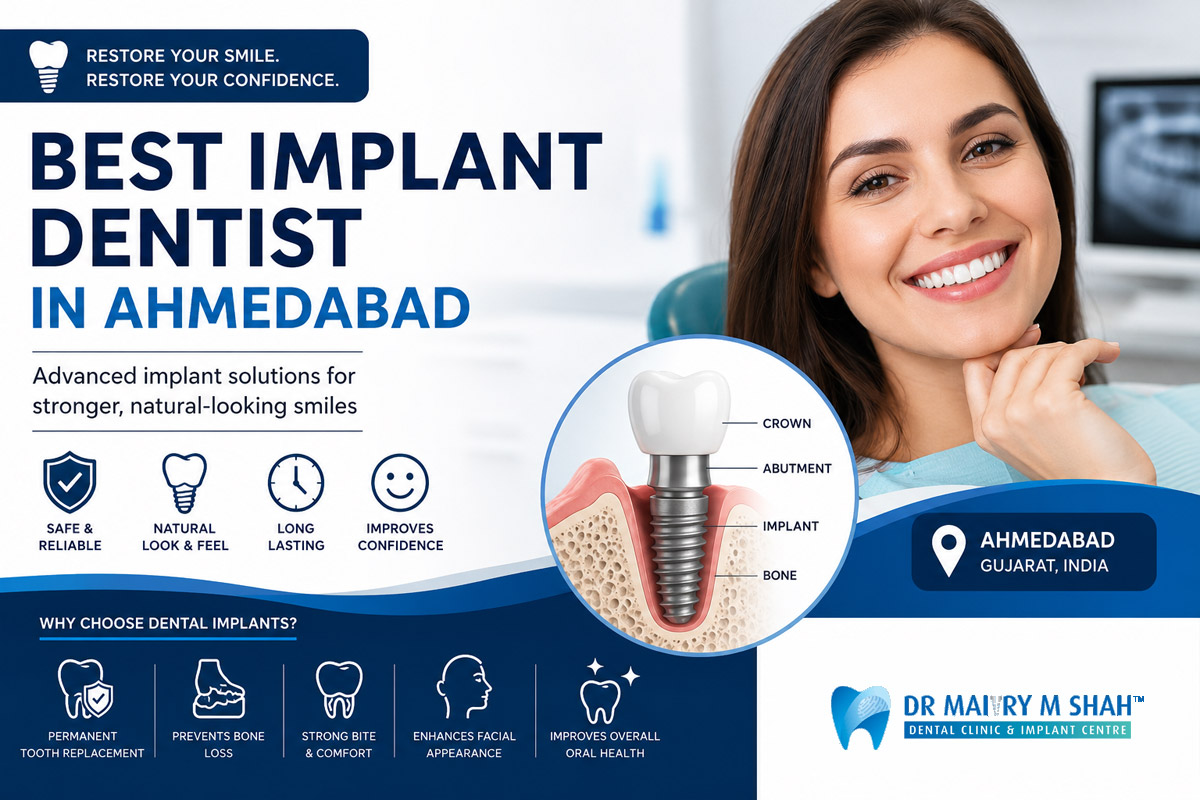
Missing one or more teeth can affect much more than your appearance. It can make chewing difficult, impact speech, reduce confidence, and gradually lead to jawbone deterioration. Fortunately, modern dentistry offers a permanent, natural-looking solution through dental implants.
If you are searching for the Best Implant Dentist in Ahmedabad, you’re already taking the first step toward restoring your smile and improving your oral health.
Dental implants have transformed restorative dentistry over the past two decades. Today, they are considered the gold standard for replacing missing teeth because they look, feel, and function almost exactly like natural teeth.
However, the success of dental implant treatment depends on much more than the implant itself. Choosing an experienced implant dentist, advanced technology, proper diagnosis, and personalized treatment planning are equally important.
This comprehensive guide explains everything you need to know before getting dental implants in Ahmedabad.
What Are Dental Implants?
A dental implant is an artificial tooth root made from medical-grade titanium or zirconia that is surgically placed into the jawbone. Over time, the implant naturally bonds with the surrounding bone through a process called osseointegration, creating a strong and stable foundation for a replacement tooth.
Unlike removable dentures, dental implants become a permanent part of your mouth, allowing you to eat, smile, and speak with complete confidence.
Components of a Dental Implant
A complete dental implant consists of three parts:
Implant Fixture
The titanium screw that is placed inside the jawbone.
Abutment
A small connector attached to the implant that supports the replacement tooth.
Dental Crown
A custom-designed ceramic or zirconia crown that matches the color, shape, and size of your natural teeth.
Together, these components restore both function and aesthetics while preserving long-term oral health.
Why Dental Implants Are Considered the Gold Standard
Traditional tooth replacement options such as bridges and removable dentures solve only part of the problem.
Dental implants replace the missing tooth root, which provides several long-term advantages.
Some of the biggest benefits include:
- Permanent tooth replacement
- Natural appearance
- Comfortable chewing
- Clear speech
- Preservation of jawbone
- No damage to adjacent teeth
- Improved facial aesthetics
- Long-lasting solution
- Better confidence
- Easy maintenance
When properly maintained, dental implants can last for decades.
Who Is a Good Candidate for Dental Implants?
Most healthy adults are suitable candidates for implant treatment.
Ideal candidates generally have:
- One or more missing teeth
- Healthy gums
- Sufficient jawbone density
- Good oral hygiene habits
- Controlled diabetes (if applicable)
- No active gum infection
Even patients with bone loss may still qualify after bone grafting or sinus lift procedures.
An experienced implant dentist performs a complete clinical examination along with CBCT imaging before recommending treatment.
Common Reasons People Lose Teeth
Understanding why teeth are lost helps prevent future dental problems.
The most common causes include:
- Tooth decay
- Gum disease
- Trauma
- Sports injuries
- Road accidents
- Failed root canal treatment
- Congenital missing teeth
- Aging
- Severe infection
Replacing missing teeth early helps prevent additional complications such as drifting teeth and bone loss.
Types of Dental Implants
- Single Tooth Implant: Ideal for replacing one missing tooth without affecting neighboring healthy teeth.
- Multiple Dental Implants: Recommended when several teeth are missing.
- Implant Supported Bridge: A bridge anchored by implants instead of natural teeth.
- Full Mouth Dental Implants: Suitable for patients missing all teeth in one or both jaws.
All-on-4 Dental Implants
A full arch restoration supported by only four strategically placed implants.
Benefits include:
- Faster treatment
- Reduced surgery
- Excellent stability
- Immediate improvement in appearance
Immediate Dental Implants
Placed immediately after tooth extraction when clinical conditions permit.
Step-by-Step Dental Implant Procedure
Step 1: Consultation
Your dentist will evaluate:
- Medical history
- Dental history
- Existing teeth
- Gum condition
- Bite analysis
- Bone quality
Step 2: Digital CBCT Scan
Three-dimensional imaging allows accurate planning.
It helps evaluate:
- Bone height
- Bone width
- Nerve location
- Sinus position
This significantly improves surgical accuracy.
Step 3: Personalized Treatment Plan
The dentist determines:
- Implant size
- Implant position
- Number of implants
- Bone graft requirement
- Timeline
Step 4: Implant Surgery
Performed under local anesthesia.
The implant is carefully inserted into the jawbone.
Most procedures take 30–90 minutes depending on complexity.
Step 5: Healing Phase
The implant gradually integrates with the surrounding bone.
Healing usually takes:
- Lower jaw: 2–3 months
- Upper jaw: 3–6 months
Step 6: Abutment Placement
Once healing is complete, the connector is attached.
Step 7: Final Crown Placement
A custom-made ceramic crown is fixed over the implant.
Your smile is now fully restored.
Benefits of Dental Implants
- Natural Appearance: Modern crowns closely resemble natural teeth.
- Strong Bite Force: Enjoy your favorite foods without discomfort.
- Bone Preservation: Implants stimulate the jawbone and help prevent bone deterioration.
- Better Speech: Unlike loose dentures, implants remain stable while speaking.
- Long-Term Durability: With proper care, implants can serve patients for many years.
- Improved Confidence: Smile, laugh, and interact socially without worrying about missing teeth.
Dental Implant Cost in Ahmedabad
The cost depends on several factors:
- Number of implants
- Implant brand
- Bone graft requirement
- Sinus lift
- Crown material
- Case complexity
- Technology used
Instead of choosing treatment based only on price, patients should consider:
- Experience of the implant dentist
- Success rate
- Sterilization protocols
- Technology
- Follow-up care
- Warranty and maintenance
Dental implants are a long-term investment in oral health.
Recovery After Dental Implant Surgery
Most patients experience mild discomfort for a few days.
Recovery tips include:
- Take prescribed medications
- Apply cold compresses
- Eat soft foods
- Avoid smoking
- Avoid alcohol
- Maintain oral hygiene
- Attend follow-up visits
Complete healing varies depending on individual circumstances.
Foods to Eat After Implant Surgery
Recommended:
- Yogurt
- Soup
- Mashed potatoes
- Oatmeal
- Smoothies
- Soft rice
- Scrambled eggs
- Soft fruits
Avoid:
- Hard nuts
- Popcorn
- Chips
- Sticky sweets
- Extremely hot beverages
How Long Do Dental Implants Last?
Dental implants have one of the highest success rates in modern dentistry.
With:
- Proper brushing
- Daily flossing
- Professional cleaning
- Regular dental checkups
they can last 20 years or longer.
How to Choose the Best Implant Dentist in Ahmedabad
Choosing the right dentist plays a major role in treatment success.
Look for:
Qualifications
Ensure the dentist has advanced training in implant dentistry.
Clinical Experience
Ask about years of experience and the number of implant procedures performed.
Digital Technology
Modern clinics use:
- CBCT Scan
- Digital Smile Design
- Intraoral Scanner
- Computer Guided Surgery
Sterilization Standards
Proper infection control is essential for successful outcomes.
Before-and-After Cases
Review real treatment results.
Patient Reviews
Read verified patient experiences to understand satisfaction and quality of care.
Why Experience Matters
Dental implants require precision.
An experienced implant dentist understands:
- Bone anatomy
- Bite forces
- Implant positioning
- Soft tissue management
- Aesthetic design
- Long-term maintenance
Even small errors in planning or placement can affect function and longevity.
Common Myths About Dental Implants
Myth 1: Implants Are Painful
Most patients report less discomfort than expected because the procedure is performed under local anesthesia.
Myth 2: Older Adults Cannot Get Implants
Age alone is not a limitation. Overall health and bone condition are more important.
Myth 3: Implants Look Artificial
Modern ceramic crowns are carefully designed to blend with natural teeth.
Myth 4: Implants Require Special Cleaning
Daily brushing, flossing, and routine dental visits are usually sufficient.
FAQ’s
Are dental implants safe?
Yes. Dental implants have been used successfully worldwide for decades.
How long does treatment take?
Depending on healing and case complexity, treatment generally takes several months.
Can smokers receive implants?
Smoking increases the risk of complications, but many smokers can still receive implants with proper evaluation and guidance.
Can implants replace all missing teeth?
Yes. Full-mouth implant solutions are available for patients missing all teeth.
Will implants affect speech?
No. In fact, implants often improve speech compared to loose dentures.
Do implants prevent bone loss?
Yes. They stimulate the jawbone and help preserve bone volume.
Caring for Your Dental Implants
Maintain your new smile by:
- Brushing twice daily
- Flossing around implants
- Using interdental brushes if recommended
- Visiting your dentist every six months
- Avoiding tobacco products
- Wearing a night guard if you grind your teeth
Proper maintenance contributes significantly to long-term success.
Final Thoughts
Dental implants are more than just a cosmetic solution. They restore oral function, preserve jawbone health, improve confidence, and provide a long-lasting replacement for missing teeth.
If you are looking for the Best Implant Dentist in Ahmedabad, choose a clinic that combines clinical expertise, advanced technology, personalized treatment planning, and compassionate patient care. A thorough consultation, detailed diagnosis, and evidence-based treatment approach can help you achieve a healthy, natural-looking smile that lasts for years.
Whether you need a single implant, multiple implants, or full-mouth rehabilitation, investing in quality implant treatment today can improve your oral health and quality of life for decades to come.
Comments are closed