
Subtotal ₹0.00

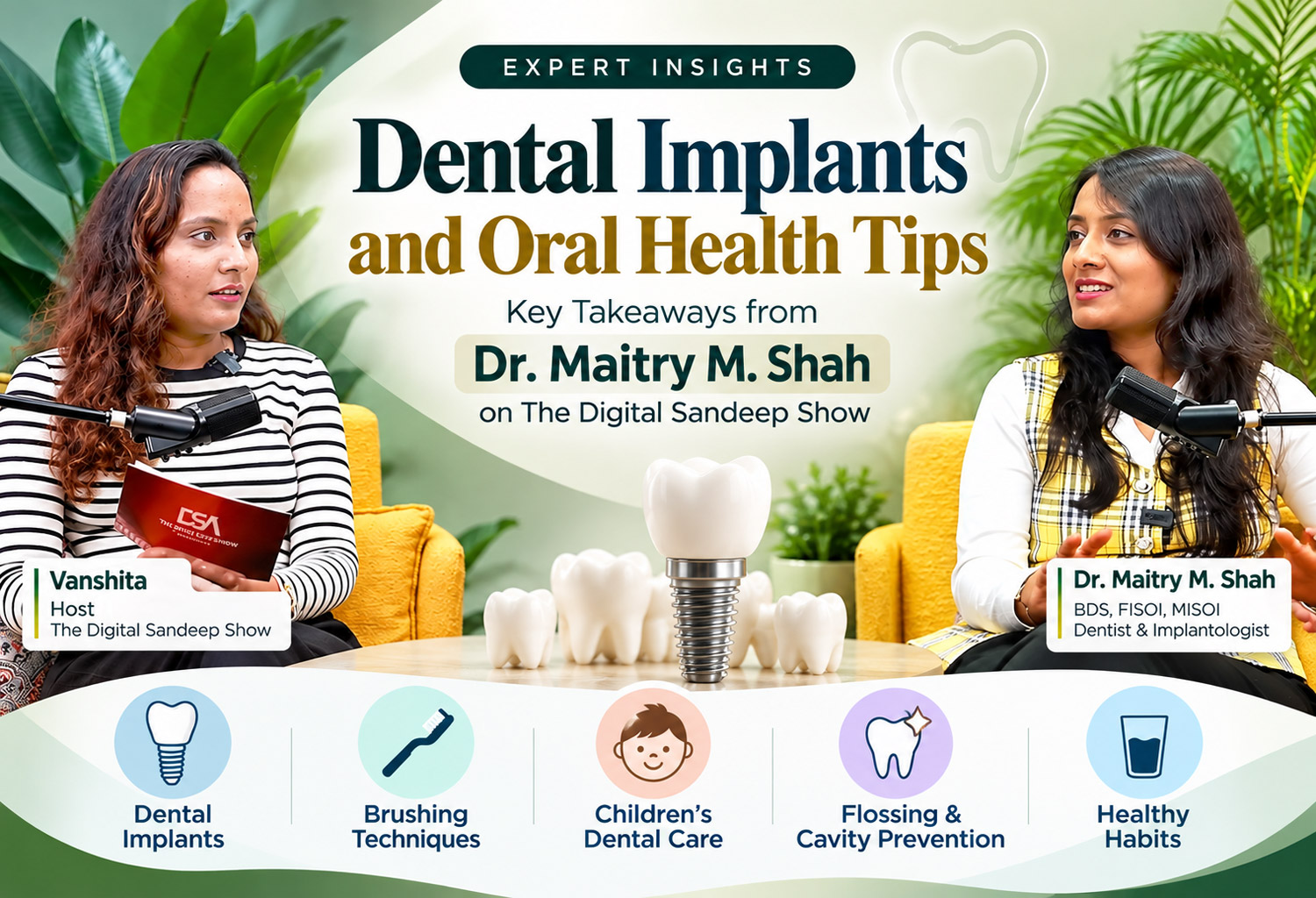
Maintaining healthy teeth involves more than brushing every morning. The right brushing technique, appropriate toothpaste, regular dental checkups, flossing, and healthy eating habits all play an important role in protecting your teeth and gums.
In an episode of The Digital Sandeep Show, Dr. Maitry M. Shah, a dentist and implantologist, shared practical insights into dental implants, cavity prevention, children’s dental care, and modern dentistry. With more than 12 years of clinical experience, Dr. Maitry M. Shah discussed common dental concerns, treatment related questions, and the importance of preserving natural teeth.
Watch the full podcast to hear Dr. Maitry M. Shah explain these essential dental care topics.
Watch the Podcast: Dr. Maitry M. Shah on The Digital Sandeep Show
What Is a Dental Implant Specialist?
A dental implant specialist focuses on replacing missing teeth using dental implants. A dental implant is a fixture placed in the jawbone to support a replacement tooth, bridge, or full arch of teeth, depending on the patient’s needs.
According to Dr. Maitry M. Shah, dental implants can be considered for people who have lost one tooth, several teeth, or most of their teeth. For suitable patients, implant supported restorations can provide a fixed alternative to conventional removable dentures.
Dental implants may help restore chewing function, improve comfort, and support everyday activities such as speaking and eating. Treatment suitability depends on factors such as jawbone condition, gum health, medical history, and oral hygiene.
Dr. Maitry M. Shah has experience in dental implant treatments ranging from single tooth replacement to full mouth rehabilitation.
Are Dental Implants Painful?
One of the most common concerns about dental implants is pain during treatment.
Dr. Maitry M. Shah explained that appropriate anaesthesia is used to help manage discomfort during dental procedures. She also discussed topical anaesthetic gel and nitrous oxide conscious sedation as options for suitable patients.
Some soreness, swelling, or discomfort may occur after implant surgery. The recovery experience varies depending on the procedure and the individual patient.
A consultation with Dr. Maitry M. Shah can help patients understand the treatment process, available comfort measures, expected recovery, and potential risks before making a decision.
Are Dental Implants Safe?
Dental implants are commonly made from titanium or titanium alloys, materials selected for their biocompatibility. Under appropriate conditions, these materials can integrate with the surrounding jawbone.
However, no surgical procedure is completely risk free. Potential complications include infection, delayed healing, nerve injury, and failure of the implant to integrate with the bone.
Dr. Maitry M. Shah evaluates each patient’s dental condition and treatment requirements before recommending an appropriate approach. Good oral hygiene and regular follow up appointments are also important for maintaining implant health.
Can Senior Citizens Get Dental Implants?
Age alone does not automatically rule out dental implant treatment. Older adults may be considered for implants when they have missing teeth and meet the relevant clinical requirements.
During the podcast, Dr. Maitry M. Shah shared an experience involving an 80 year old patient who had difficulty eating because of extensive tooth loss.
The patient received full mouth implant treatment. According to Dr. Maitry M. Shah, the patient’s ability to eat improved during the treatment process, and the family was pleased with the progress.
This experience highlights how missing teeth can affect eating comfort and nutrition, particularly among older adults. The appropriate treatment and expected outcomes depend on each patient’s condition.
How Can You Prevent Cavities and Protect Natural Teeth?
Preventive dentistry helps identify dental problems before they become more complicated. Small cavities, tartar buildup, bleeding gums, sensitivity, and food getting stuck between teeth should not be ignored.
Dr. Maitry M. Shah recommends regular dental checkups, approximately every six to eight months for many patients. Some individuals may require more frequent visits depending on their oral health and risk factors.
Early diagnosis may allow a dentist to treat problems with simpler procedures and help preserve natural teeth whenever possible.
Why Is Brushing Twice a Day Important?
Brushing twice daily helps remove plaque, food debris, and bacteria from tooth surfaces.
Dr. Maitry M. Shah particularly emphasised brushing before bedtime. During sleep, saliva production decreases and the mouth can become drier. Plaque and food debris left on the teeth may contribute to tooth decay and gum problems.
An effective daily routine includes:
- Brushing twice daily with a suitable fluoride toothpaste.
- Cleaning the teeth before going to sleep.
- Using a soft toothbrush and a gentle brushing technique.
- Cleaning the outer, inner, and chewing surfaces of the teeth.
- Replacing the toothbrush when its bristles become worn.
Night time brushing is especially important and should not be routinely skipped.
Is Brushing for Two Minutes Necessary?
Yes. Two minutes is a useful target for brushing thoroughly.
Dr. Maitry M. Shah explained that brushing for longer periods does not necessarily improve cleaning, particularly when excessive pressure or an incorrect technique is used.
Brushing too aggressively may contribute to enamel wear and gum recession over time.
A helpful reminder from the podcast is to brush for two minutes, twice daily. Dr. Maitry M. Shah also discussed replacing the toothbrush every two months. Replace it sooner if the bristles become frayed and follow the manufacturer’s guidance.
What Is the Correct Way to Brush Your Teeth?
Brushing technique matters as much as brushing frequency.
Dr. Maitry M. Shah advised against relying only on vigorous horizontal scrubbing. Instead, use gentle, controlled movements to clean the different surfaces of the teeth and along the gumline.
Remember to:
- Brush the outer surfaces of the teeth.
- Clean the inner surfaces carefully.
- Brush the chewing surfaces of the back teeth.
- Pay attention to the gumline and hard to reach areas.
- Avoid excessive pressure.
If you are unsure whether your brushing technique is effective, ask your dentist to demonstrate the appropriate method.
Is Brushing Enough to Prevent Cavities?
Brushing is essential, but it may not adequately clean the tight spaces between teeth.
Dental floss helps remove plaque and food debris from these areas. A water flosser uses a stream of water to clean between teeth and around dental work, and may be useful for people who find conventional floss difficult to use.
Dr. Maitry M. Shah highlighted flossing as an important part of daily oral hygiene.
The most appropriate cleaning method depends on the spacing between your teeth, gum health, dental restorations, and personal needs. Your dentist can help you choose a suitable option.
Which Toothpaste Should Children and Adults Use?
Using the same toothpaste for everyone in the family may not be appropriate. Toothpaste selection should take into account age, fluoride requirements, dental sensitivity, and individual oral health concerns.
Dr. Maitry M. Shah discussed the importance of choosing age appropriate toothpaste for children, particularly those who may swallow it.
Parents should supervise brushing and use an age appropriate amount of fluoride toothpaste. A dentist can advise on the correct fluoride concentration and quantity for each child.
Adults with specific dental concerns may also benefit from specialised toothpaste.
Examples include:
Tooth sensitivity: Desensitising toothpaste may help reduce sensitivity.
Increased risk of tooth decay: A dentist may recommend a suitable fluoride toothpaste.
Dry mouth: Products designed for dry mouth may help support oral comfort.
Other dental concerns: Toothpaste selection should be based on the condition being treated.
Specialised toothpaste does not replace professional assessment when symptoms persist.
When Should Children Start Brushing Their Teeth?
Parents should begin cleaning a child’s teeth as soon as the first tooth appears.
Dr. Maitry M. Shah discussed using an appropriate infant toothbrush or finger brush during early childhood, followed by a small, age appropriate toothbrush as the child grows.
Parents should supervise brushing, use an age appropriate amount of fluoride toothpaste, and encourage children to spit it out when they are able to do so.
Early dental visits can help parents understand brushing methods, fluoride requirements, dietary habits, and cavity prevention.
Why Are Children Developing Cavities at an Early Age?
Children’s cavities can be influenced by several factors, including frequent sugar exposure, plaque buildup, inadequate brushing, and poor dietary habits.
During the podcast, Dr. Maitry M. Shah highlighted the increased consumption of packaged foods and sugary snacks as concerns in children’s diets.
Reducing the frequency of sugary snacks and drinks, encouraging balanced meals, and establishing consistent oral hygiene routines can help lower the risk of tooth decay.
Parents also play an important role. When children see adults brushing regularly and taking care of their teeth, they are more likely to develop similar habits.
Healthy eating habits and regular dental care should be introduced early rather than waiting until a child experiences pain.
Does Drinking Water Help Maintain Oral Health?
Drinking enough water supports overall health and can help maintain moisture in the mouth.
Dr. Maitry M. Shah noted that busy schedules often cause people to forget to drink water. She also discussed how dietary habits and frequent consumption of outside food can affect oral health.
Saliva helps protect teeth by washing away food particles and supporting the mouth’s natural defences against acids. A dry mouth can increase the risk of dental problems, including tooth decay.
Drinking water regularly, limiting frequent sugary drinks, and discussing persistent dry mouth with a dentist can help support oral health.
Why Should You Avoid Using Toothpicks Between Your Teeth?
One of Dr. Maitry M. Shah’s important recommendations was to avoid using toothpicks carelessly to remove food stuck between teeth.
Aggressive or improper use of wooden or plastic toothpicks can injure the gums and damage surrounding tissues.
If food frequently becomes trapped between your teeth, it may indicate an issue that requires dental assessment, such as a gap, a cavity, or a problem with an existing filling.
Dental floss, interdental brushes, or a water flosser may be more appropriate, depending on the situation.
Do not ignore recurring food impaction, bleeding gums, persistent bad breath, or dental sensitivity. Early assessment can help identify the underlying cause.
How Is Modern Dentistry Changing Dental Treatment?
Dr. Maitry M. Shah described how her practice has evolved over more than a decade, from a single dental chair in a small clinical space to a five chair practice with a team of dental professionals.
She highlighted the growing role of digital dentistry, modern equipment, and technology in planning and delivering dental care.
Digital scanners can capture detailed images of the teeth and oral structures, supporting treatment planning and the creation of dental restorations. Artificial intelligence may also assist certain digital workflows.
Technology can improve aspects of diagnosis, planning, and clinical efficiency, but it does not replace professional judgement, individual assessment, or appropriate patient care.
Why Do International Patients Travel to India for Dental Treatment?
During the podcast, Dr. Maitry M. Shah shared that her practice receives patients from countries including the United States, Canada, Australia, the United Kingdom, Dubai, and parts of Europe.
She identified treatment costs, appointment availability, and the ability to organise treatment within a planned travel schedule as reasons some international patients consider dental care in India.
She explained that her team coordinates appointments in advance so that suitable treatment can be planned around a patient’s visit.
However, the overall treatment duration depends on the procedure. Some treatments can be completed relatively quickly, while dental implants may require several months for healing and integration before the final restoration is placed.
Patients travelling internationally should discuss their complete treatment plan, expected visits, recovery requirements, and arrangements for follow up care before travelling.
Frequently Asked Questions About Dental Implants and Oral Hygiene
1. How long does dental implant treatment take?
The duration depends on the patient’s bone condition, gum health, treatment complexity, and whether additional procedures are required. Some patients may receive temporary teeth early, while final restorations may need to wait until healing and implant integration are adequate.
2. Can dental implants replace all missing teeth?
Implant supported treatment can replace multiple missing teeth and may support a full arch restoration in suitable patients. The number and placement of implants depend on the patient’s anatomy, oral health, and treatment plan.
3. How often should I visit a dentist?
Dr. Maitry M. Shah recommends routine dental checkups approximately every six to eight months for many patients. The ideal interval may differ according to your risk of cavities, gum disease, and other dental conditions.
4. Should I brush my teeth before sleeping?
Yes. Brushing before bedtime helps remove plaque and food debris that accumulate throughout the day. Night time brushing is an important part of cavity prevention.
5. Is dental floss better than mouthwash?
Floss physically cleans between teeth, where a toothbrush may not reach effectively. Mouthwash serves different purposes and does not replace brushing or interdental cleaning. Your dentist can recommend the appropriate combination for your needs.
6. What should I do if food frequently gets stuck between my teeth?
Clean the area gently using an appropriate interdental cleaning method. If the problem keeps recurring, consult a dentist to identify the cause rather than relying on toothpicks.
7. Can dental implants help older adults eat more comfortably?
Dental implants may improve chewing function for suitable older adults with missing teeth. The expected benefits depend on the patient’s general health, bone condition, oral hygiene, and individual treatment plan.
Final Thoughts
Healthy teeth and gums depend on consistent daily habits and timely professional care. Brushing twice a day, using the correct toothpaste, cleaning between teeth, maintaining healthy dietary habits, and attending regular dental checkups can help prevent many common dental problems.
Dental implants may offer a treatment option for people with missing teeth, but the right approach begins with an individual assessment by a qualified dental professional.
As Dr. Maitry M. Shah emphasised during her conversation on The Digital Sandeep Show, do not ignore small dental concerns. Early attention to sensitivity, bleeding gums, bad breath, and food getting stuck between teeth can help prevent problems from progressing.
About Dr. Maitry M. Shah
Dr. Maitry M. Shah is a dentist and implantologist at Dr. Maitry M. Shah Dental Clinic & Implant Centre in Paldi, Ahmedabad. With qualifications listed on the clinic website as BDS, FISOI, and MISOI, Dr. Maitry M. Shah focuses on dental care, implant dentistry, and continuing professional development.
Dr. Maitry M. Shah has shared her clinical experience, approach to patient care, and insights into preventive and digital dentistry during her appearance on The Digital Sandeep Show.
For personalised guidance about missing teeth, dental implants, or ongoing oral health concerns, contact the clinic to arrange a consultation.
Contact Dr. Maitry M. Shah Dental Clinic & Implant Centre
Address: 406, 4th Floor, Merlin Pentagon, Mahalaxmi Five Roads, Paldi, Ahmedabad, Gujarat 380007, India
Phone: +91 75678 94005
Email: drmaitrymshah@gmail.com
Website: https://www.drmaitrymshahdentalclinic.com/
Clinic timings: Monday to Saturday, 10:00 AM to 2:00 PM and 3:00 PM to 8:00 PM. Sunday closed.
Book a consultation: Contact Dr. Maitry M. Shah Dental Clinic & Implant Centre
Medical disclaimer: This article provides general educational information based on the podcast conversation. It is not a substitute for an individual dental examination, diagnosis, or treatment plan.
Comments are closed